

 See My Latest Article on HelloNation
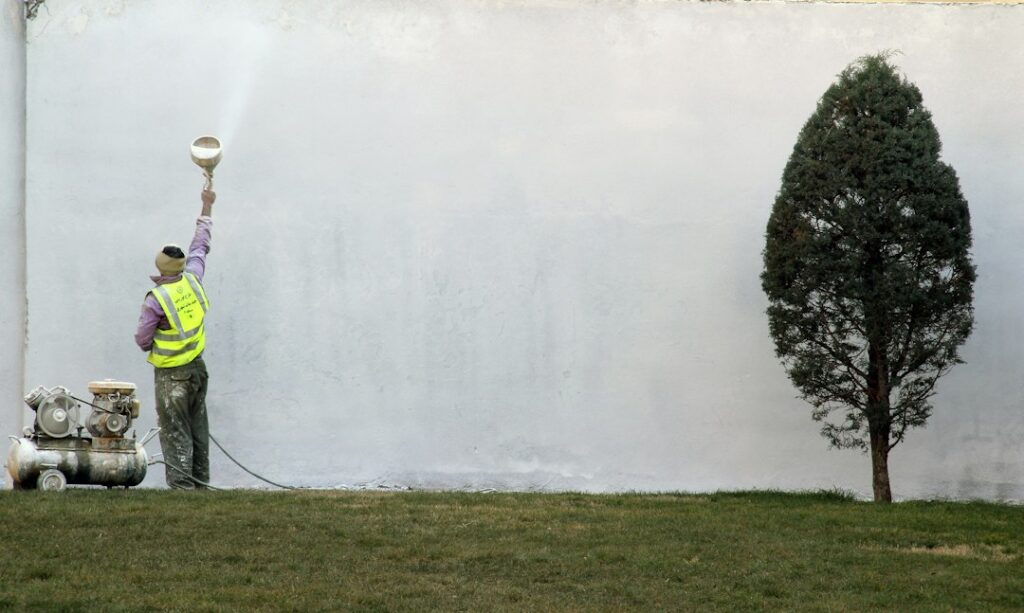
Anti-graffiti coatings are protective surface treatments designed to make spray paint, marker ink, and similar materials easier to remove from industrial walls, equipment enclosures, tanks, concrete structures, and metal panels. They do not prevent vandalism, but they can reduce the time, surface damage, and repainting associated with cleanup.
In industrial settings, the coating is usually selected as part of a larger surface-protection system. Its performance depends on the substrate, preparation, coating chemistry, type of graffiti, cleaning method, and local weather conditions.
How do anti-graffiti coatings work?
Anti-graffiti coatings work by creating a surface that resists absorbing or strongly bonding with paint and ink. Many use tightly cross-linked polymers or low-surface-energy chemistry that leaves fewer openings for graffiti materials to penetrate.
On an unprotected concrete block wall, spray paint can soak into pores and rough texture. Removing it may require aggressive solvents, abrasive cleaning, or repainting. A properly selected coating creates a smoother, less absorbent barrier, allowing the graffiti to be lifted with controlled washing or a compatible cleaner.
The coating does not make the wall permanently stain-proof. It gives maintenance crews a better chance of removing the marking before it penetrates, spreads, or leaves a shadow.
What are the main types of anti-graffiti coatings?
The three broad categories are sacrificial, semi-permanent, and permanent systems. Each one handles graffiti removal differently.
Sacrificial coatings
A sacrificial coating is intended to be removed along with the graffiti. Cleaning may involve hot water, pressure washing, or a mild cleaning process that strips away the protective layer.
Afterward, the surface must be allowed to dry and the coating must be reapplied. This approach can be useful on porous masonry, historic materials, or surfaces where aggressive solvents would cause damage.
Its main limitation is maintenance frequency. Repeated vandalism can lead to repeated recoating, and pressure washing may be difficult around electrical equipment, interior production areas, drainage systems, or occupied spaces.
Semi-permanent coatings
Semi-permanent products provide more durability than sacrificial treatments but may still lose some of their protective performance during repeated cleaning. Depending on the formulation, the coating may need a touch-up or partial replacement after several graffiti removals.
These systems can be practical where vandalism is occasional and the protected surface needs a relatively natural appearance.
Permanent coatings
Permanent, or non-sacrificial, coatings are formulated to remain in place through multiple graffiti-removal cycles. Common chemistries may include specialized acrylics, polyurethanes, epoxies, or siloxane-based materials.
The term “permanent” does not mean indestructible. Strong solvents, abrasive tools, prolonged exposure, poor application, or incompatible cleaning agents can still damage the film. Permanent systems generally require careful attention to film thickness, curing, and cleaner compatibility.
Which industrial surfaces can be protected?
Anti-graffiti systems may be used on:
- Concrete and concrete block
- Brick and masonry
- Painted or unpainted steel
- Metal siding and equipment housings
- Utility cabinets and barriers
- Interior walls in warehouses or manufacturing areas
- Coated structural components
- Noise barriers and transportation-related structures
The same product should not automatically be used on every substrate. Concrete may require a primer or pore-sealing coat, while painted steel may require testing to confirm that the anti-graffiti layer will bond without softening or lifting the existing finish.
Rough, chalky, damp, oily, or previously contaminated surfaces can reduce performance. A coating may also change gloss, color, texture, or slip characteristics, which matters in production areas and public-facing spaces.
Why does surface preparation matter so much?
Surface preparation is often more important than the coating label. Dust, grease, rust, curing compounds, salts, loose paint, and moisture can interfere with adhesion and create weak spots.
Concrete and masonry may need cleaning, drying, patching, or priming. Steel may require removal of corrosion and loose mill scale. Existing paint must be checked for adhesion before it is covered. If the underlying coating is failing, an anti-graffiti topcoat can seal the problem in rather than solve it.
The surface should also be free of active leaks and excessive moisture. In Monroe County, NY, seasonal freeze-thaw conditions, snow, rain, and winter road-treatment residues can affect exterior structures. Moisture trapped beneath a coating may contribute to blistering, peeling, or staining.
Does an anti-graffiti coating work on every kind of graffiti?
No. Performance varies by marking material and how long it remains on the surface.
Common graffiti materials include aerosol paint, permanent marker, water-based marker, wax crayon, shoe polish, and industrial pigments. Some are easier to remove than others. Older markings may oxidize, harden, or penetrate more deeply. Sunlight and weather can also make residues more difficult to clean.
Fast removal is usually preferable, but cleaning should not become more aggressive simply because the coating is present. A harsh solvent or excessive pressure can damage the protective film, the underlying paint, sealants, gaskets, or nearby equipment.
A small test area is useful before full-scale cleaning, especially when the surface has an unknown coating history.
What cleaning methods are used?
The correct method depends on the coating manufacturer’s tested cleaning procedure and the surface beneath it. Options may include:
- Low-pressure washing with a compatible detergent
- Hot-water cleaning
- A designated graffiti-removal cleaner
- Soft brushing or wiping
- Controlled pressure washing
- Localized replacement of a sacrificial coating

Pressure washing must be controlled to avoid driving water into joints, electrical components, insulation, or wall assemblies. Interior industrial spaces may require containment, ventilation, spill control, and collection of wash water.
Cleaning chemicals should never be selected solely because they remove paint quickly. They may create worker exposure concerns, damage nearby finishes, or leave residues that interfere with recoating.
Are anti-graffiti coatings suitable for food, manufacturing, or occupied facilities?
They can be, but suitability depends on the location and operating conditions. Interior spaces may have stricter requirements for odor, ventilation, cure time, chemical resistance, cleanability, and contamination control.
A coating intended for an exterior barrier may not be appropriate near food processing, sensitive electronics, clean production zones, or areas with frequent washdowns. The product’s safety information, cure requirements, and intended-use limitations should be reviewed before application.
During installation, overspray, vapors, dust, and cleaning residues must be managed so they do not affect workers, stored materials, machinery, or ventilation systems.
What are common misconceptions?
Anti-graffiti coatings do not stop graffiti from being applied. They make removal easier; they do not act as a physical deterrent.
A glossy surface is not automatically graffiti-resistant. Gloss alone does not prove that paint and ink can be removed without damage.
Permanent coatings do not eliminate maintenance. They still require compatible cleaners, timely removal, inspection, and occasional repair.
Pressure washing is not always the safest method. Water pressure can damage masonry, joints, paint films, insulation, and equipment.
The coating is not a substitute for corrosion protection. A graffiti-resistant layer may need to be installed over a properly prepared and corrosion-protected metal system.
What should facility managers evaluate before specifying one?
A practical evaluation should consider:
- The substrate and existing coating condition
- Interior or exterior exposure
- Frequency and type of graffiti
- Expected cleaning methods
- Exposure to sunlight, moisture, chemicals, and abrasion
- Winter weather and freeze-thaw movement
- Required appearance and gloss level
- Ventilation and worker-safety limitations
- Drainage and wastewater controls
- Compatibility with future repainting or repairs
For high-risk areas, a small field trial can reveal whether graffiti removes cleanly, whether the appearance is acceptable, and whether the coating tolerates the cleaning routine used by the facility.
The most reliable system is not necessarily the hardest or thickest coating. It is the one that matches the surface, the environment, and the actual maintenance process.